SecureLoad

SOLUTIONS

Jack-up Operations

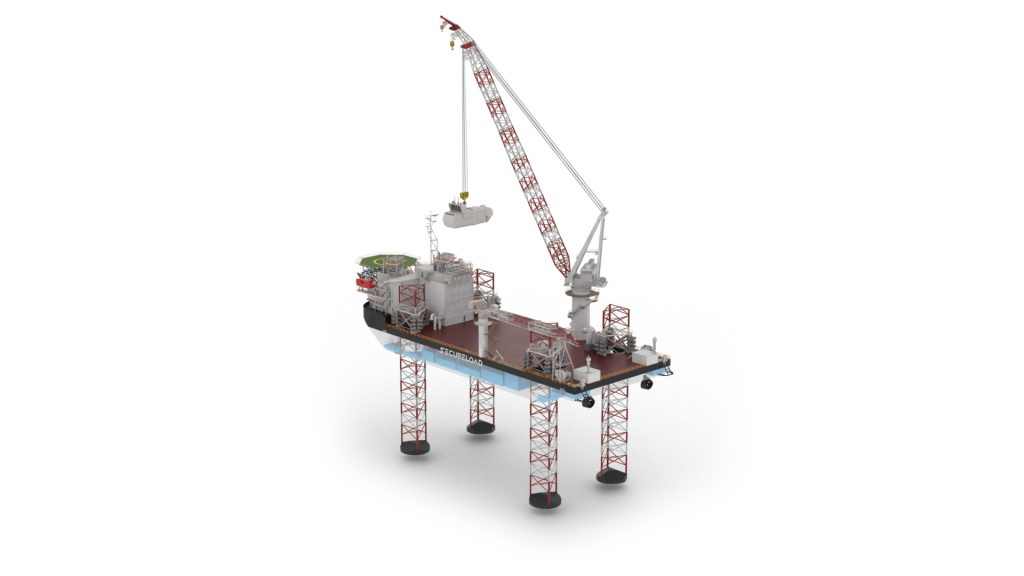
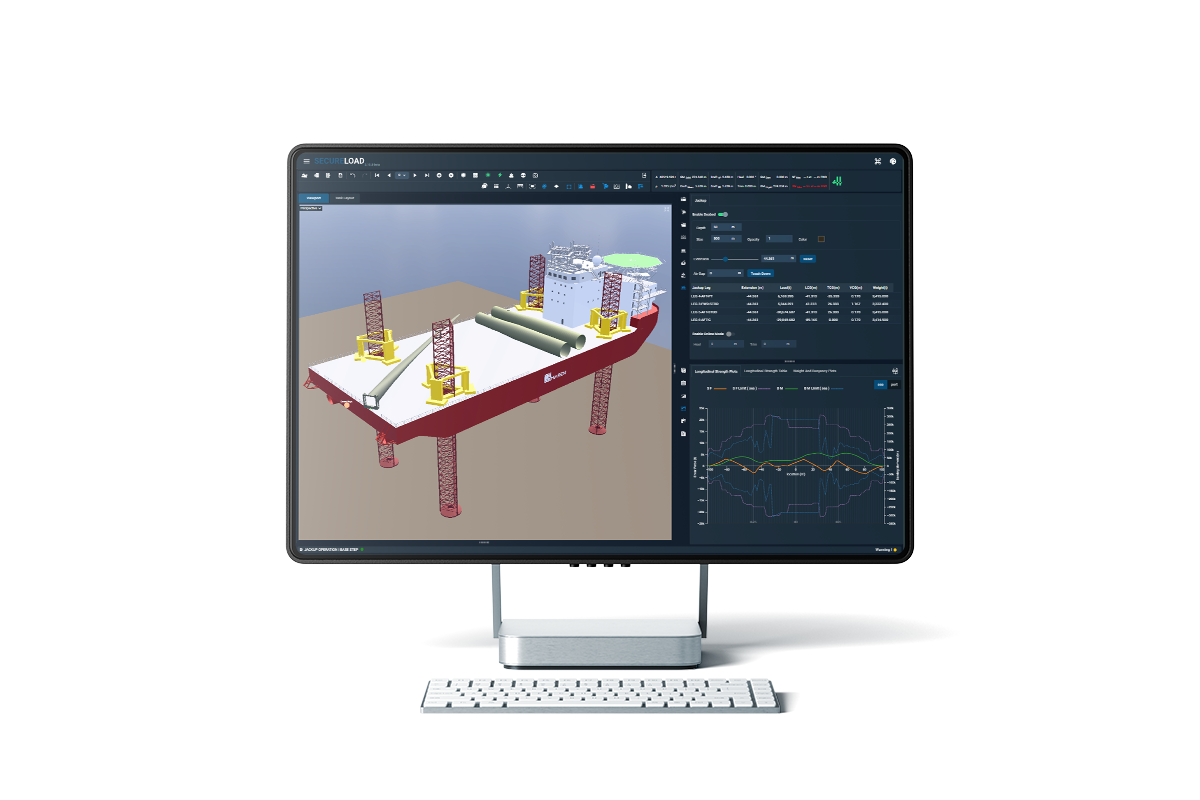
Jack-up platforms are self-elevating mobile units designed to provide a stable deck in varying water depths. From exploration and extraction of hydrocarbons to supporting wind farm installations, these versatile units face unique stability and structural challenges as they transition between floating and elevated states. 

SecureLoad Systems provides a specialized, web-based solution tailored to the complex operational envelopes of Jack-up rigs and liftboats.


UNDERSTANDING THE COMPLEXITY

Operational Challenges

Operating a Jack-up platform involves managing a dynamic transition between being a floating vessel and a fixed offshore structure, requiring precise analysis of hydrodynamic, geotechnical, and structural factors.

Complex Modes of Operation

Jack-ups operate in distinct modes, each with specific stability and safety criteria.
Transit & Transition

During transit, the unit floats with legs raised, making stability critical due to the high centers of gravity caused by the massive leg structures. The jacking or transition phase involves lowering legs to the seabed and elevating the hull, which requires managing complex interactions between buoyancy, leg weight, and soil reaction.

Operational (Elevated) Mode

Once elevated in the operational mode, the hull is out of the water, and the focus shifts to structural integrity, overturning moments, and the bearing capacity of the spud cans.

Environmental and Structural Loads

Operational loads are highly variable with drilling equipment cantilever positions & deck loads constantly changing the center of gravity (CoG).

Dynamic Compliance

Jack-ups operate under complex regulatory frameworks that require adherence to multiple Vertical Center of Gravity (VCG) limit curves. These curves define the maximum allowable VCG for various scenarios, including different drafts, wind speeds, and intact versus damaged stability conditions.

Variable Eccentricity

Cantilever positions and deck loads constantly change the CoG and eccentricity, necessitating constant monitoring against eccentricity limit curves.

Leg and Spudcan Interaction

Buoyancy effects and soil interaction are critical safety concerns during the transition to a fixed offshore structure.

Buoyancy Changes

Buoyancy effects play a significant role when legs are submerged but not yet grounded, or when spud cans enter the splash zone. In these situations, buoyancy changes rapidly, directly affecting the vessel’s draft and trim.

Geotechnical Safety

Soil interaction is a critical safety concern; operators must ensure the seabed can support the spud can pressure to prevent punch-through during the preloading and elevated phases.

Complex Deck Cargo Management

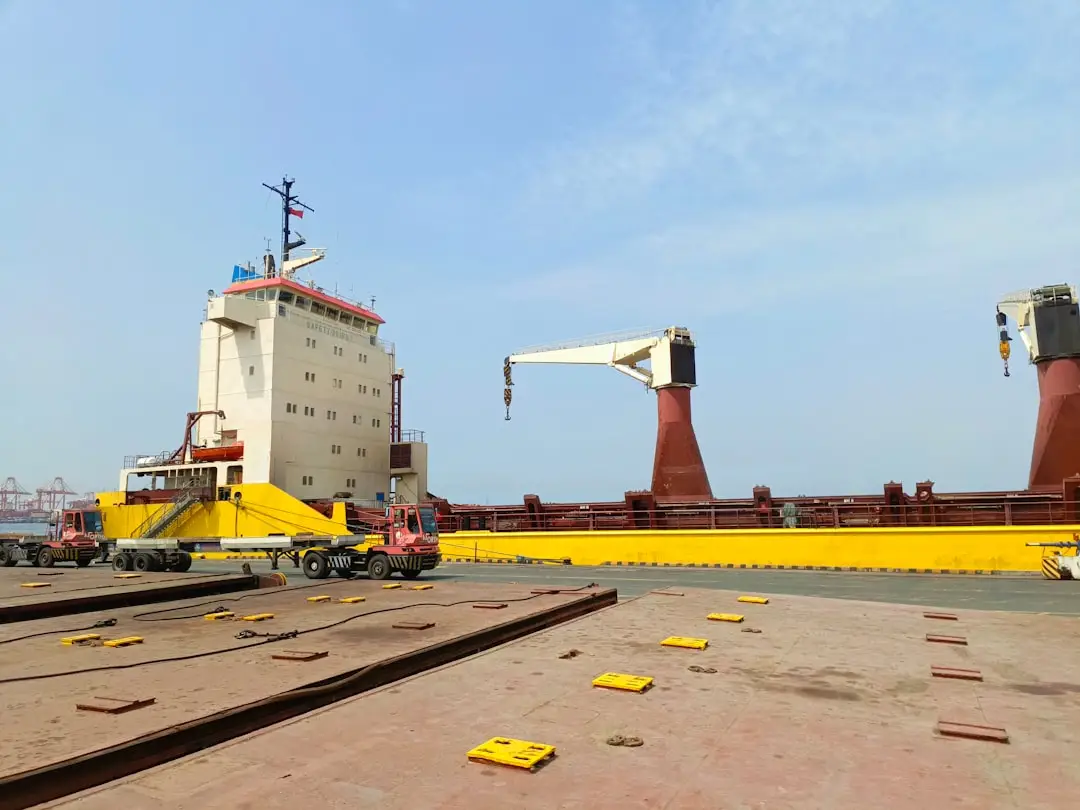
Jack-ups often serve as transport and installation platforms, carrying diverse payloads.

Stowage Optimization

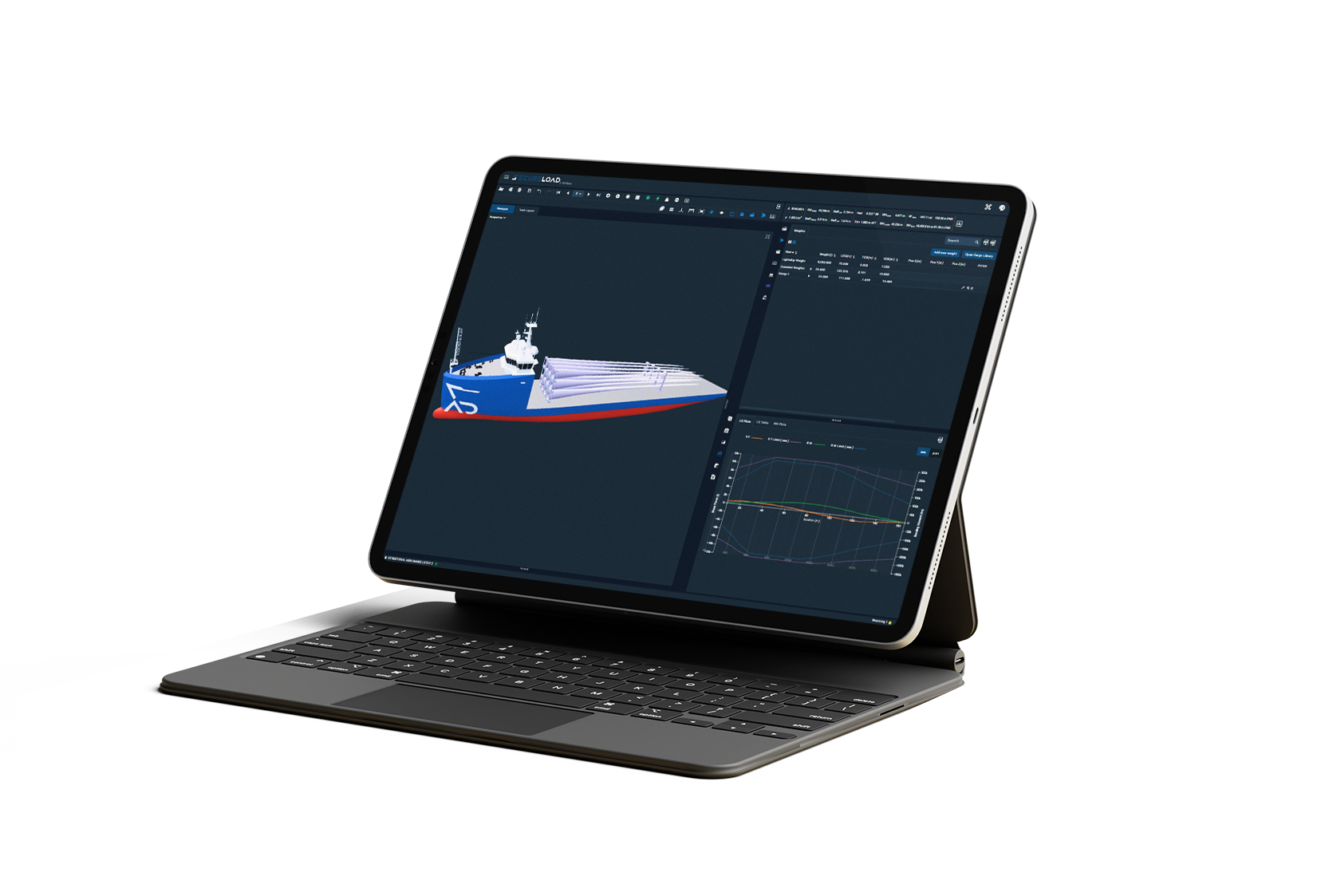
Managing a mix of containers, pipes, drilling equipment, and large project cargo like wind turbine blades requires precise stowage to optimize deck space and maintain stability.

Lifting Operations

Lifting operations with onboard cranes further complicate this, as handling heavy loads requires ensuring stability during the lift-on/lift-off process while avoiding collisions with the legs or cantilever.

SecureLoad addresses these challenges with features specifically designed with unique geometry & physics of Jack-up units.

CAPABILITIES

Jack-up Operations Features

Real-Life Cargo Management & 3D Visualization

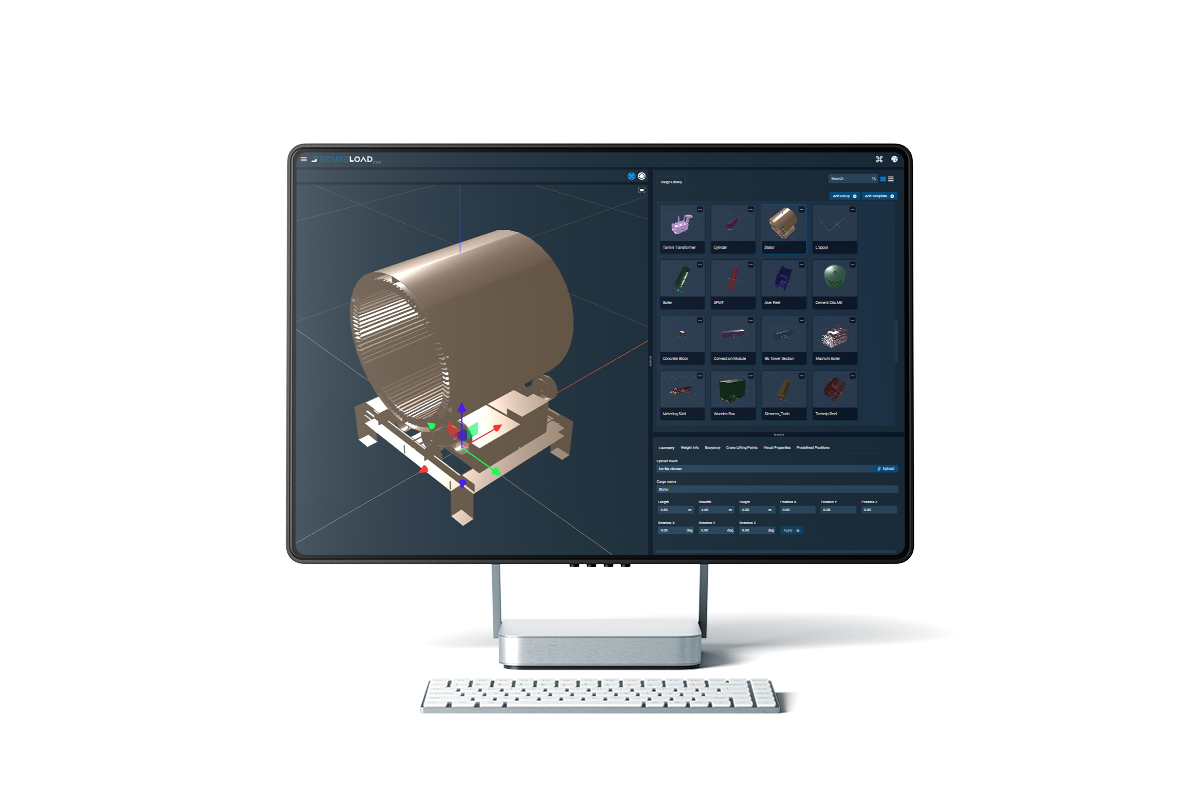
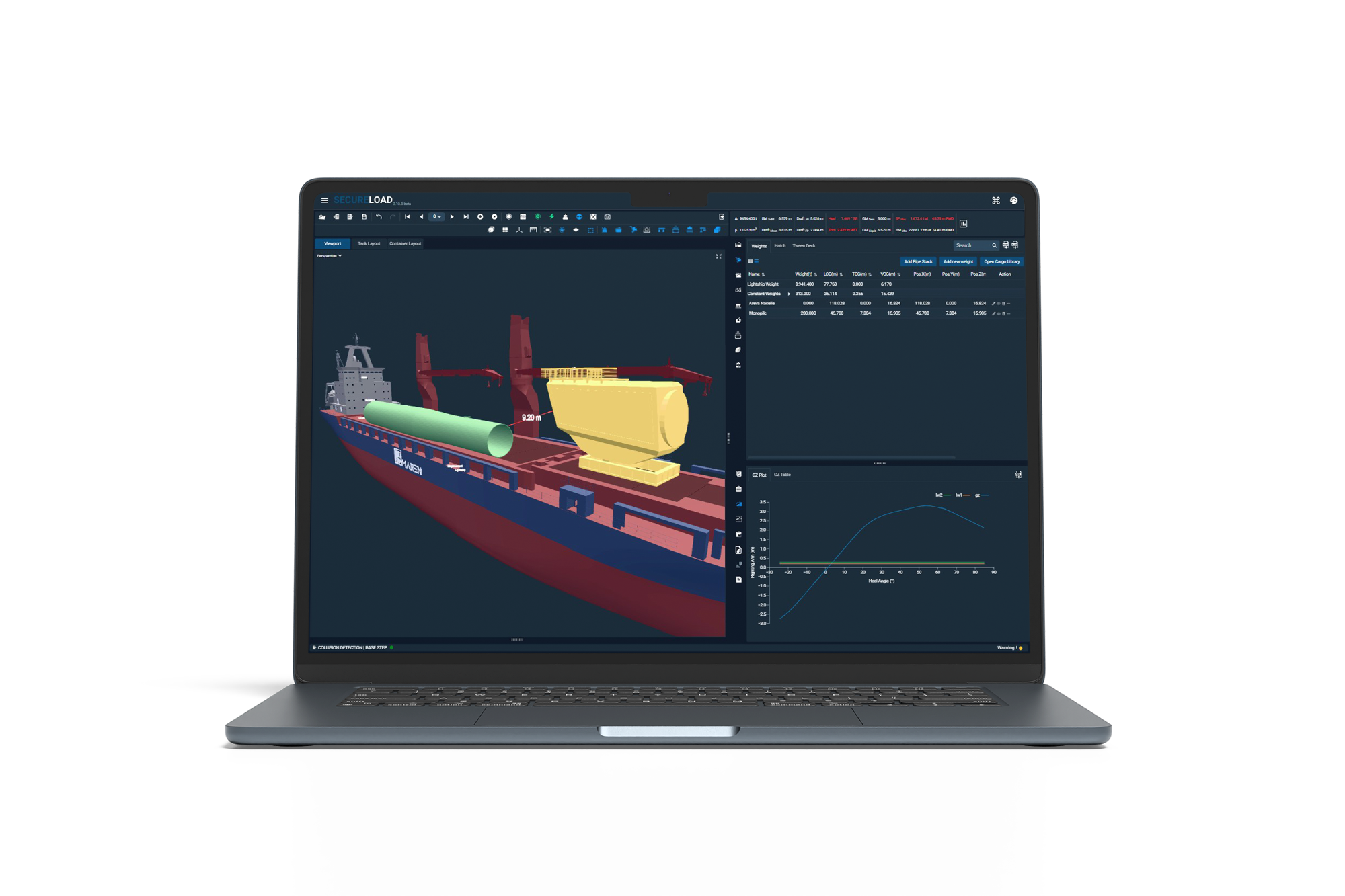
SecureLoad brings 3D technology directly to web browsers, transforming the way vessel loading is conducted. Through interactive 3D functionality, users can effortlessly reposition cargo within a dynamic environment. The system includes a comprehensive cargo library and supports importing custom 3D meshes (OBJ/STL) for unique project cargoes. By automatically calculating essential properties like volumes and centroids from mesh data, the system enables precise loading simulations and visual collision detection against the jack-up’s legs and structures.

Advanced Jacking Operation Simulation

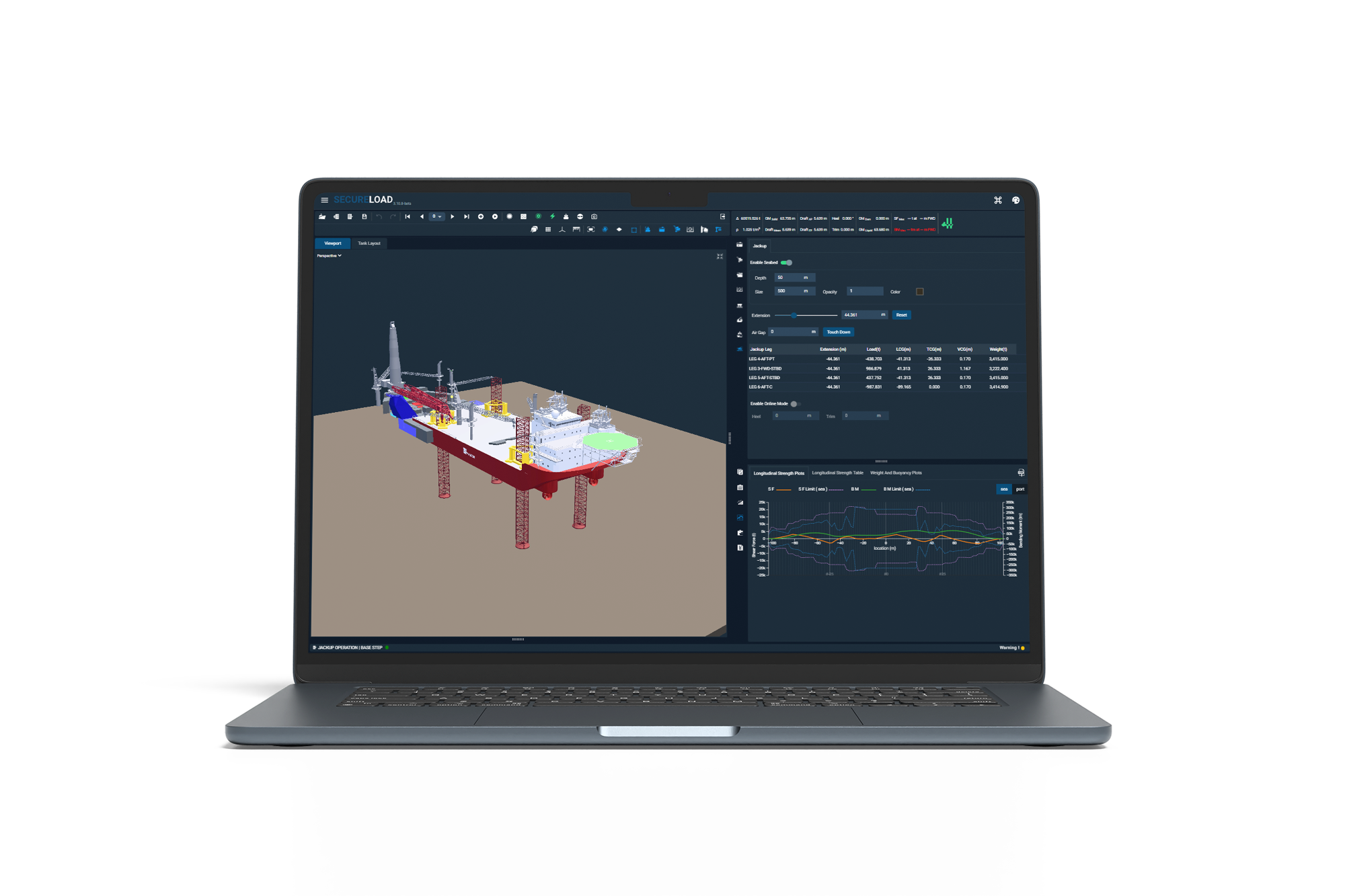
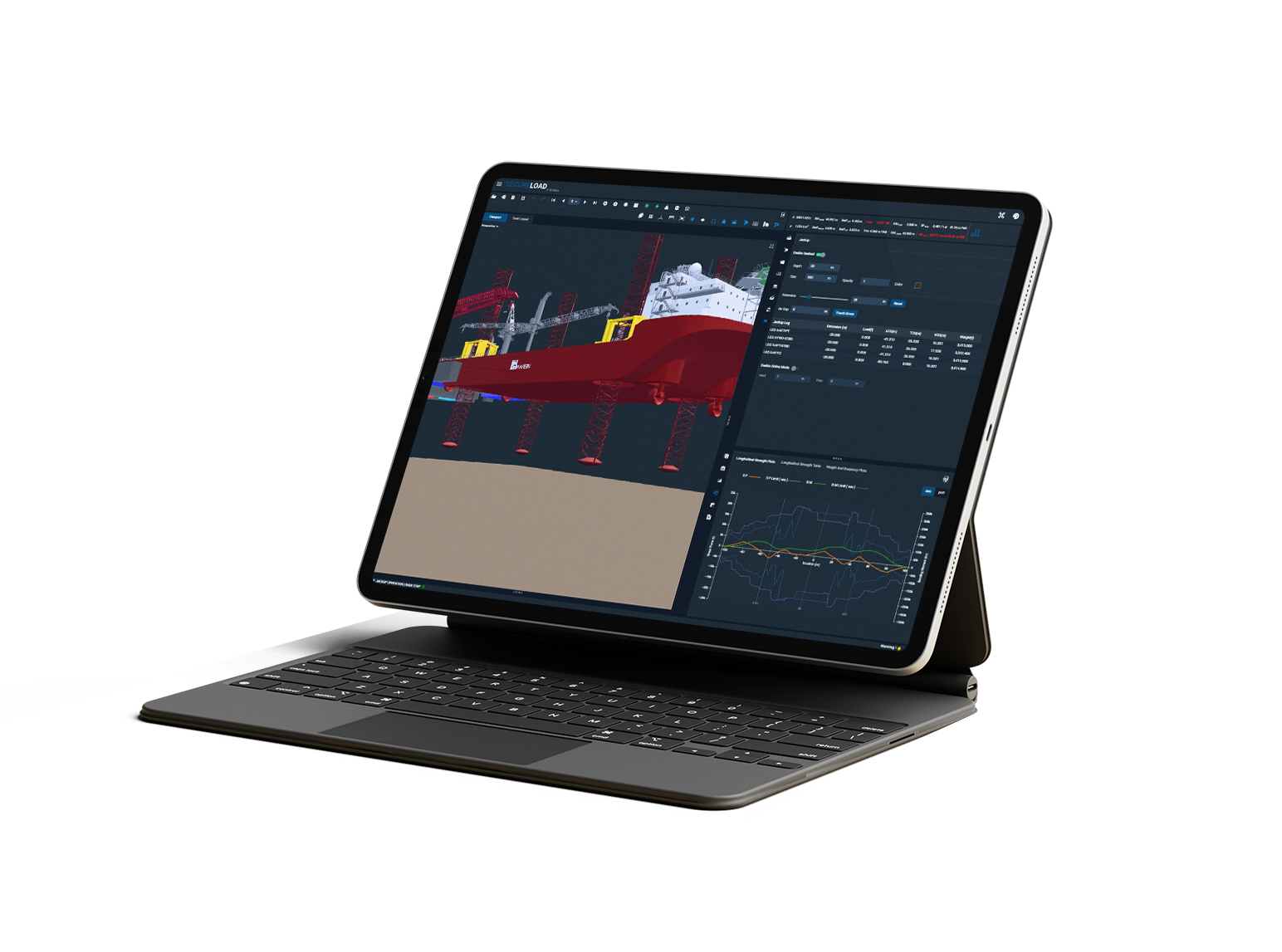
SecureLoad allows for the seamless simulation of all operational phases, ensuring safety during critical transitions. Users can easily switch between and simulate different modes of operation, including floating with standard stability calculations, semi-floating during transition phases, and the fully elevated jacked-up condition. The system also provides precise control over leg extension and retraction to model exact operational states.

Comprehensive Buoyancy Modeling

Unlike standard ship loading software, SecureLoad accurately models the complex appendages of a Jack-up. The software explicitly calculates the buoyancy contributions of the legs and spud cans as they enter or exit the water. This capability is crucial for generating accurate draft and stability predictions during transit and jacking operations.

Advanced Cargo and Crane Management

Leveraging technology from multipurpose vessel operations, SecureLoad offers robust tools for deck cargo management. Users can import custom 3D meshes for unique project cargoes, allowing for precise positioning and visual collision detection. The Crane & Lifting Module simulates crane operations, validating lifts against load charts and checking stability throughout the lifting process.

Collision Detection

High-fidelity geometry supports accurate contact, clearance, and attitude evaluation throughout the plan. By using mesh-based vessel and cargo models, the system enables precise clearance and contact checks. It provides automatic collision detection for easy detection of potential contact from protrusions and validation of blocking arrangements.

Critical Load and Stability Calculations

SecureLoad provides real-time monitoring of the unit’s safety parameters to prevent structural overload or instability. This includes calculating individual leg reactions and tracking the total elevated weight to avoid exceeding the jacking system’s capacity. The software also monitors the Center of Gravity (CoG) eccentricity relative to the geometric center of the legs to maintain balance against overturning moments.

Structural Assurance

To ensure structural integrity, the system provides real-time monitoring of Shear Force and Bending Moment against class limits during all phases of loading and transport. Future updates will include integration with structural twins to verify local deck strength against specific cargo footprints.

Unified Ship-Shore Collaboration

SecureLoad facilitates a single source of truth where the shore-based engineering team uses the exact same calculation engine as the onboard crew. A load-out plan developed in the office can be synced to the vessel for execution. Superintendents and port captains can also conduct remote oversight, monitoring the vessel’s condition and load-out progress remotely.

MODULES

Relevant Modules

Basic
basic.svg

Defines loading conditions and performs calculation of intact stability and longitudinal strength. Results are evaluated against applicable regulatory criteria and presented with full transparency through curves, limits, and numerical outputs, supported by comprehensive reports suitable for operational use and compliance review.

Ballast Distribution
ballast_distribution.svg

Determines optimal ballast tank filling levels to achieve the desired loading condition. The module uses an iterative optimisation approach while respecting operational constraints such as tank usage restrictions and filling limitations, ensuring solutions remain practical and executable onboard.

Jack-Up
online.svg

The Jack-Up module supports jack-up vessel operations through interactive 3D visualisation and a dedicated solver for leg-load distribution. It provides clear insight into load transfer during jacking operations and supports planning and verification of jack-up conditions under varying operational scenarios.

General Cargo
general_cargo.svg

The General Cargo module supports loading and distribution of unitized cargo across holds and deck areas. It enables configuration of hatch covers, tween decks, and internal bulkheads to accurately represent the vessel’s operational arrangement. The module includes predefined configurations for common vessel layouts while also allowing users to define custom configurations to suit vessel-specific or project-specific requirements.

Crane
crane.svg

The Crane module supports simulation of cargo loading using single or tandem crane operations. Crane positions can be defined manually or derived automatically based on cargo geometry and position. The module performs load calculations throughout crane operations, verifies vessel stability and longitudinal strength at each lifting stage in accordance with regulatory limits, and checks for potential collisions between cargo, cranes, and vessel structures during lifting operations.

Online
online.svg

Enables real-time integration of tank level data into the loading computer. The module connects to onboard tank sensor systems using standard MODBUS communication, allowing live updating of the vessel’s loading condition during operations.

Want to be part of our vision and journey?

Connect with us to explore how SecureLoad can modernize your cargo operations.

Get in touch - Submit a form

Contact Us