SecureLoad

SOLUTIONS

Multipurpose and Heavy Lift Vessels

Multipurpose (MPP) and Heavy Lift vessels are the versatile workhorses of the shipping industry. SecureLoad provides a comprehensive solution tailored to the unique challenges of managing complex cargo mixes, reconfigurable structures, and critical lifting operations.

UNDERSTANDING THE COMPLEXITY

Operational Challenges

Operating MPP and Heavy Lift vessels involves managing diverse cargo types, complex hold configurations, and demanding lifting operations.

Diverse Cargo Mix & Stowage

Precise stowage planning is essential to optimize space and ensure safety when managing a wide variety of cargo types.

Complex Cargo Variety
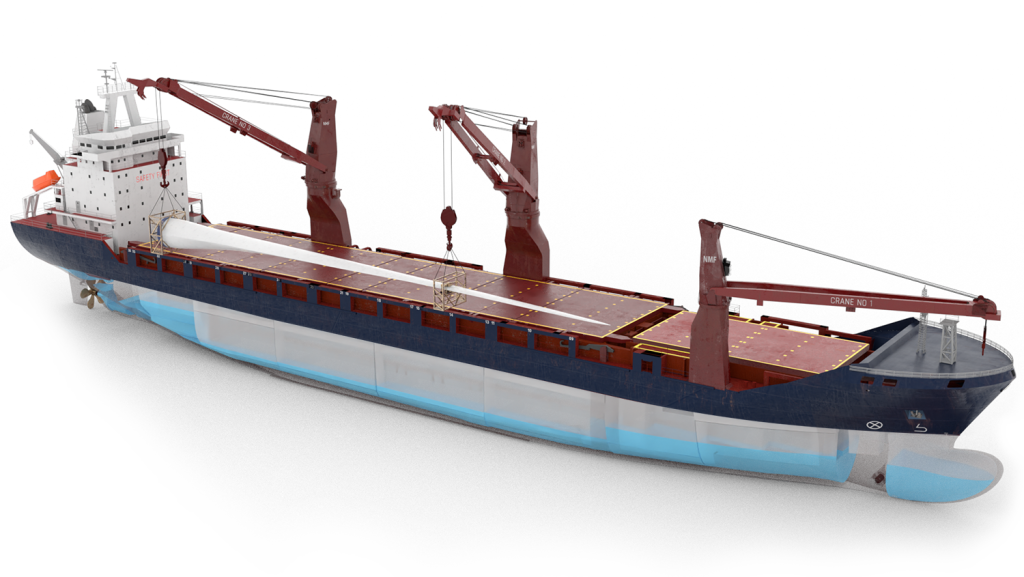
MPP vessels carry everything from breakbulk, steel products (coils, plates, pipes), and timber to bagged cargo and complex project cargoes like wind turbine blades or oil & gas modules.
Safety & Optimization
Each cargo type demands specific handling. SecureLoad ensures that stowage plans are optimized for space while adhering to strict safety and securing requirements.

Complex Hold Configurations

Managing reconfigurable structures like tween decks and hatch covers while ensuring compliance with structural limits.

Structural Flexibility
Holds often feature tween decks and hatch covers that enable separation and better utilization but introduce deck loading limits and access constraints.
Bulk & Grain Compliance
Grain or bulk cargoes require specific hold configurations and strict compliance with the Grain Code, adding another layer of operational complexity.

Heavy Lift Operations

Self-geared loading operations, especially tandem lifts, significantly impact vessel stability and structural integrity.

Stability Monitoring
Heavy lifts involving multiple cranes require constant and careful monitoring of heeling moments. Precise calculations are needed to manage the dynamic shift in stability.
Precise Maneuvering
Maneuvering complex project cargo demands exact clearance calculations to avoid collisions with ship structures, especially in tight port environments.

Pontoon Assisted Stability

Utilizing deployable stability pontoons introduces significant operational complexity during deployment and transit.

Operational Complexity
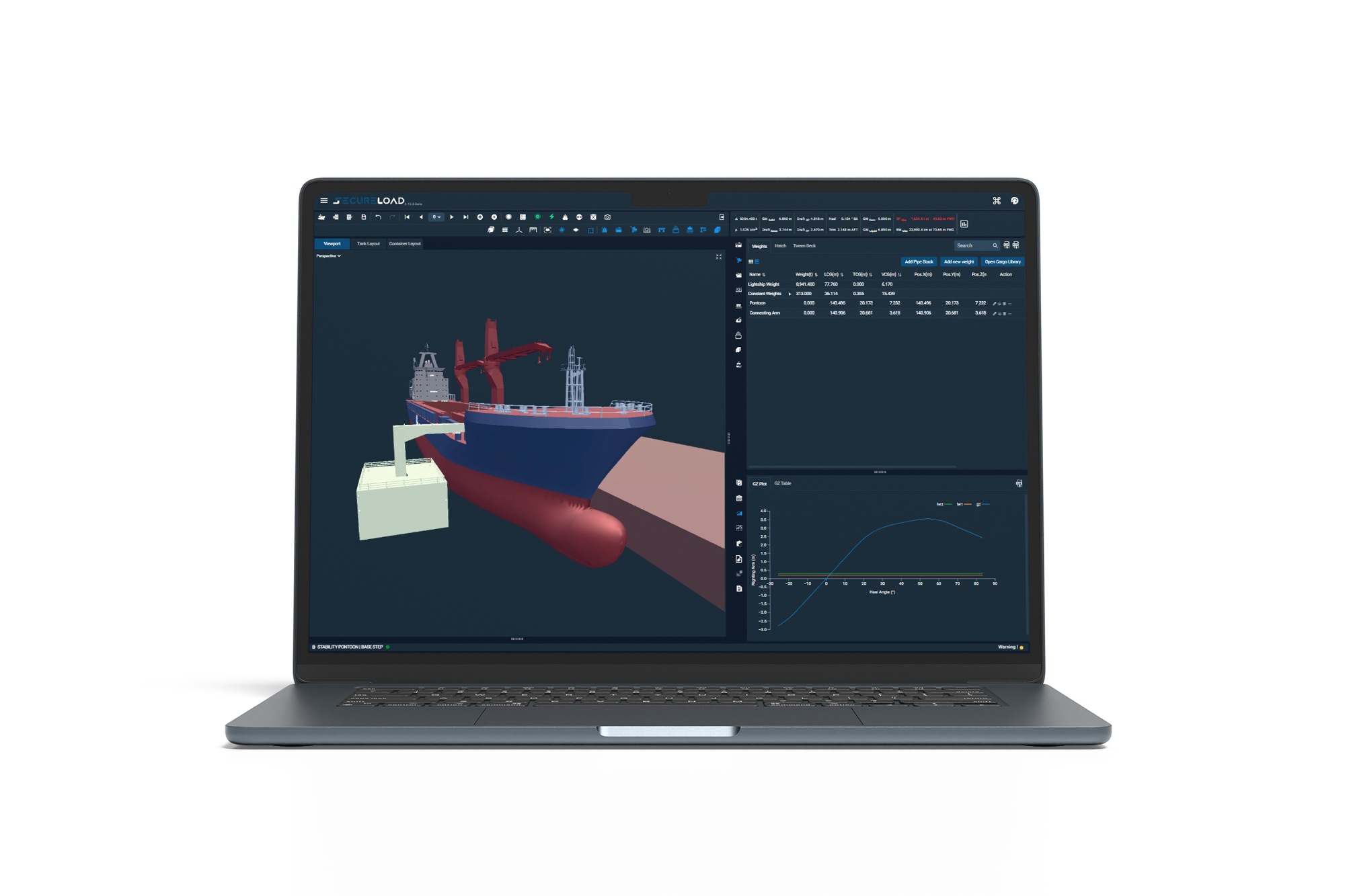
Pontoons must be lifted into position using the vessel’s own cranes—a critical operation that itself alters the vessel’s stability profile.
Hydrostatic Transition
Managing the transition from ‘pontoon-as-cargo’ to ‘pontoon-as-hull’ requires meticulous planning of ballasting and connection sequences to ensure safety.

Mixed Container Operations

Integrating container management alongside general cargo requires standard positioning, lashing, and dangerous goods verification.

Standardized Integration
Even on non-dedicated vessels, containers require standard positioning and BAPLIE data exchange for efficient port operations.
Safety Standards
Managing dangerous goods and ensuring proper lashing alongside general cargo is critical for maintaining high safety standards during transit.
SecureLoad addresses these challenges through specialized tools for cargo management, hold configuration, lifting simulation, and compliance verification.
Capabilities

MPP & Heavy Lift Features

Real-Life Cargo Management & 3D Visualization
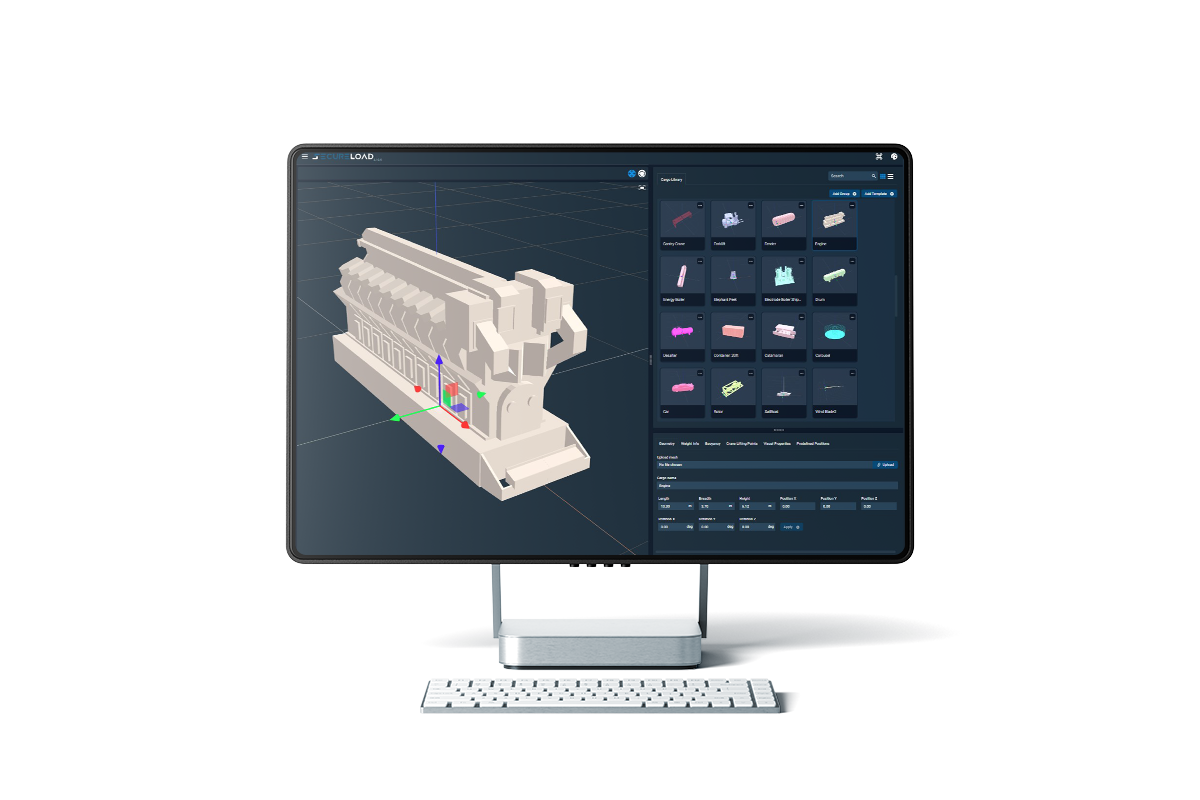
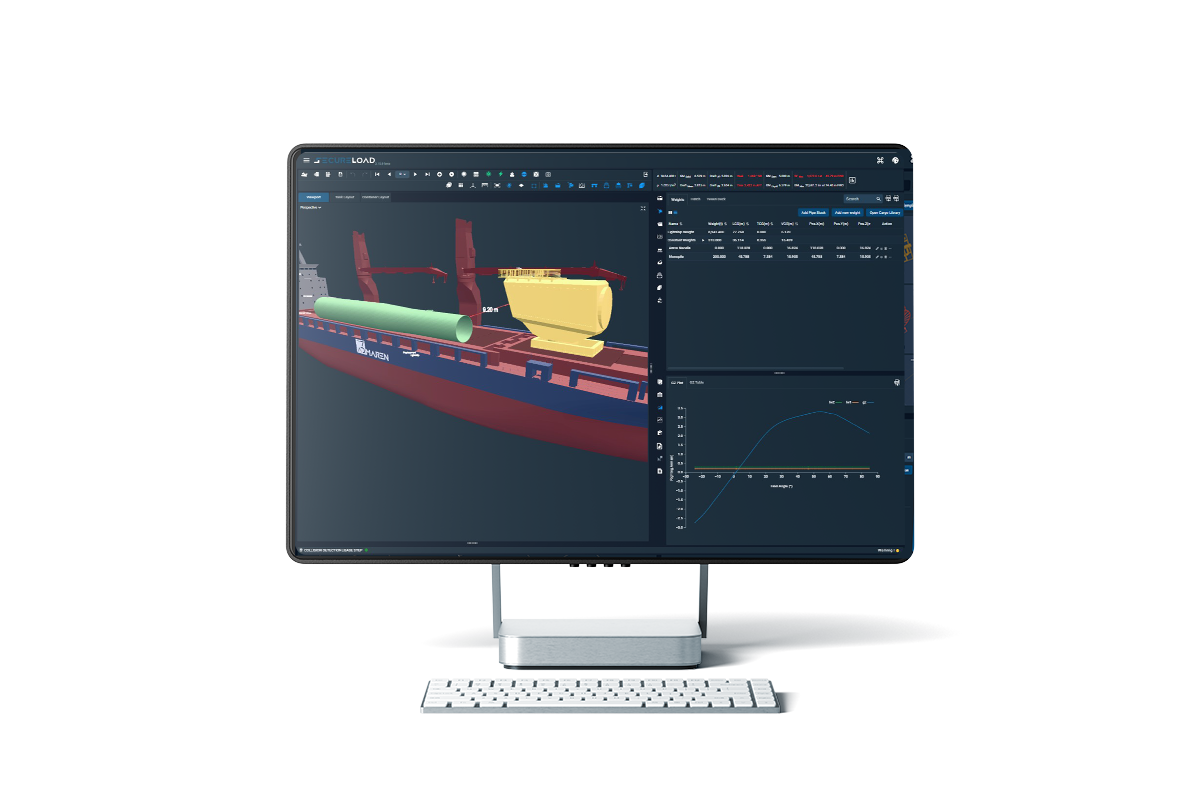
SecureLoad brings 3D technology directly to web browsers, transforming the way vessel loading is conducted. Through interactive 3D functionality, users can effortlessly reposition cargo within a dynamic environment, ensuring meticulous control over load configurations. The system includes a comprehensive cargo library and supports importing custom 3D meshes (OBJ/STL) for unique project cargoes. By automatically calculating essential properties like volumes and centroids from mesh data, the system facilitates highly accurate loading simulations and clear visual representation.

Flexible Hold & Deck Configuration

Manage the vessel’s structural configuration to suit the specific demands of each cargo. By selecting the required hold configuration, the system automatically positions tween decks and bulkheads accordingly. The General Cargo Module manages tween decks and hatch covers with predefined or custom configurations, while the specialized Grain/Bulk Cargo Module provides tools for defining bulk loading and performing grain loading assessments, ensuring full compliance with the Grain Code.

Advanced Crane & Lifting Module

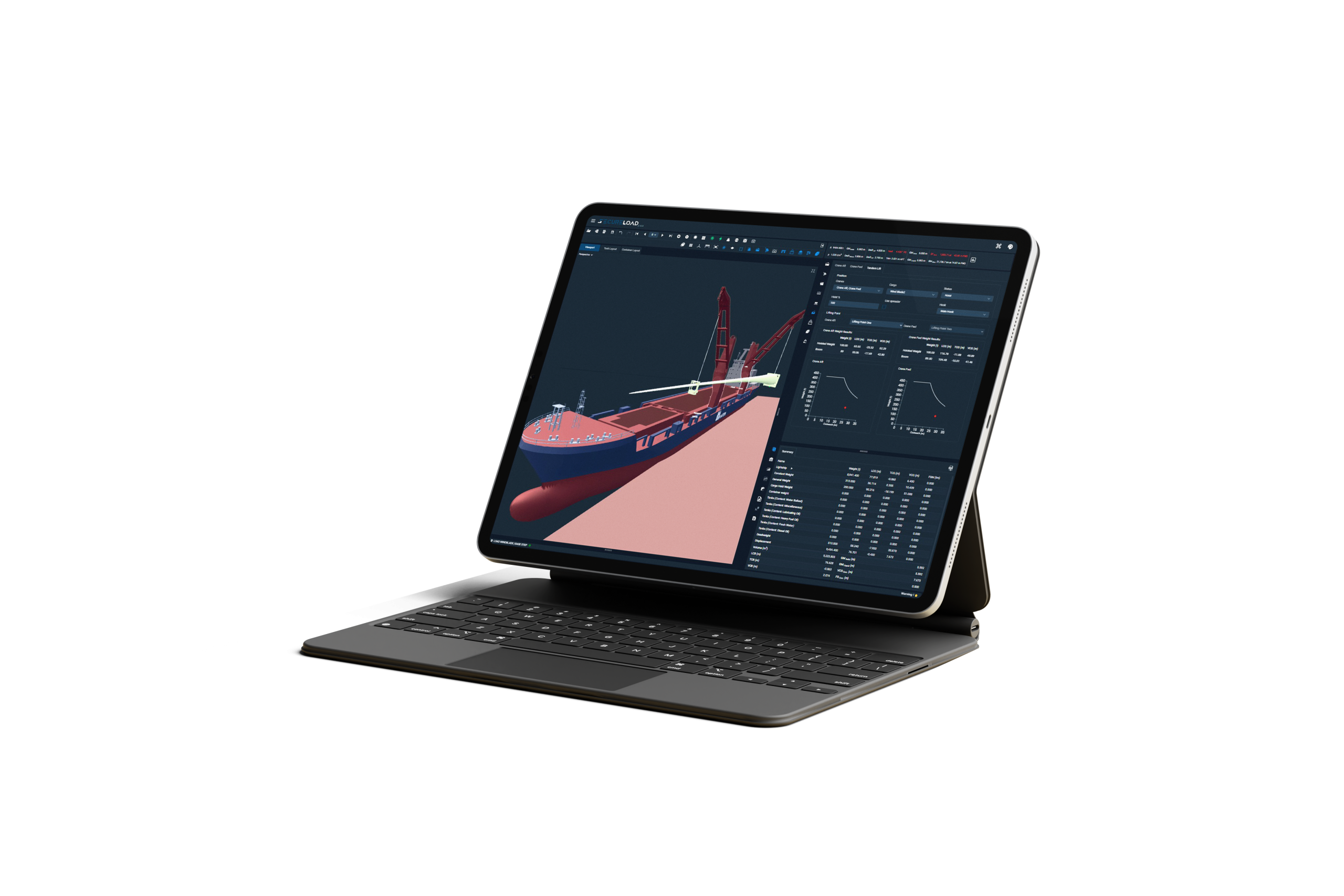
Simulate complex lifting operations with confidence, supporting both single and tandem crane operations. SecureLoad validates the current load against multiple crane load charts and provides a workflow for step-by-step Lift-On/Lift-Off (Lo/Lo) simulations, performing stability, strength, and cargo collision checks at each interval. Additionally, it interfaces with ballast control systems to automatically compensate for load moments created by crane operations, maintaining the vessel at a constant heel.


Collision Detection & Clearance

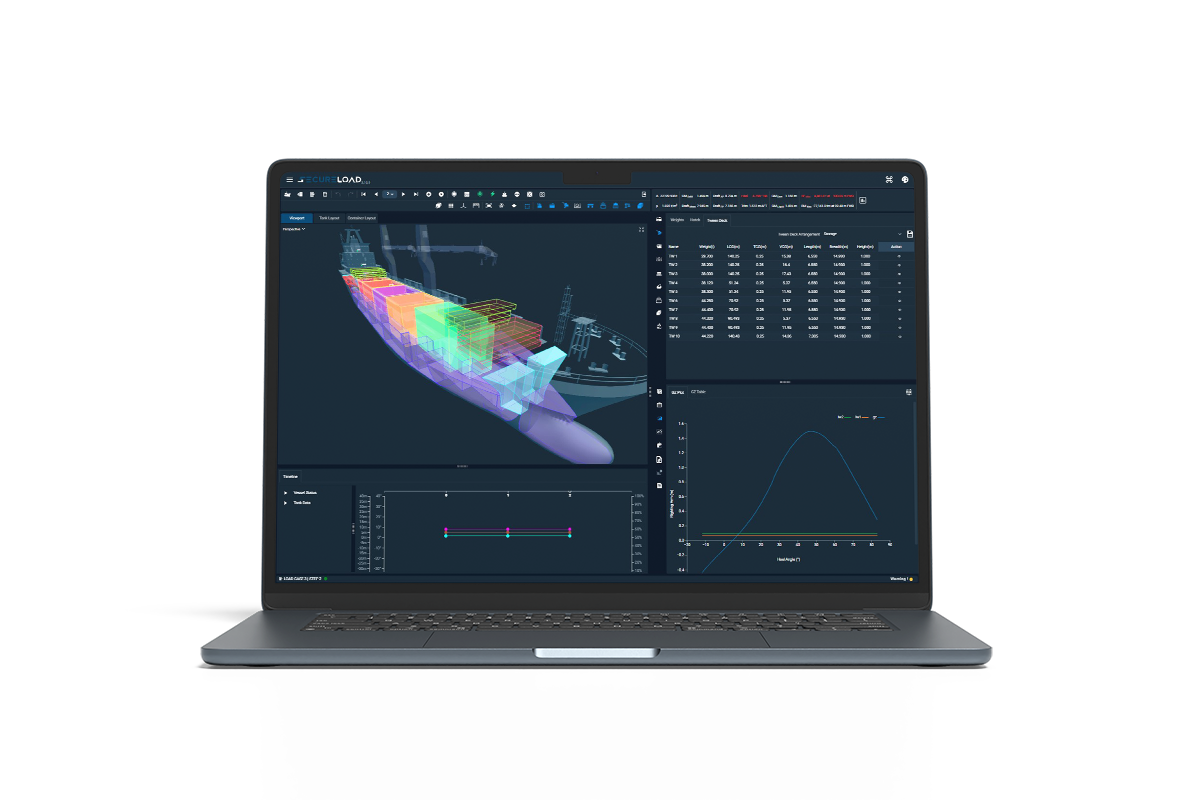
High-fidelity geometry supports accurate contact, clearance, and attitude evaluation throughout the plan. By using mesh-based vessel and cargo models, the system enables precise clearance and contact checks. It provides automatic collision detection for easy identification of potential contact from protrusions and validation of blocking arrangements for complex project cargo.

Pontoon & Stability Management

For operations requiring extra stability, the system features an advanced solver capable of handling the complex hydrostatics associated with pontoon-assisted stability. It includes dedicated functionalities that allow users to easily position pontoons at their various operating or stowed positions, ensuring accurate simulation of the vessel’s behavior and safety throughout the entire deployment and lifting process.

Container & Structural Assurance

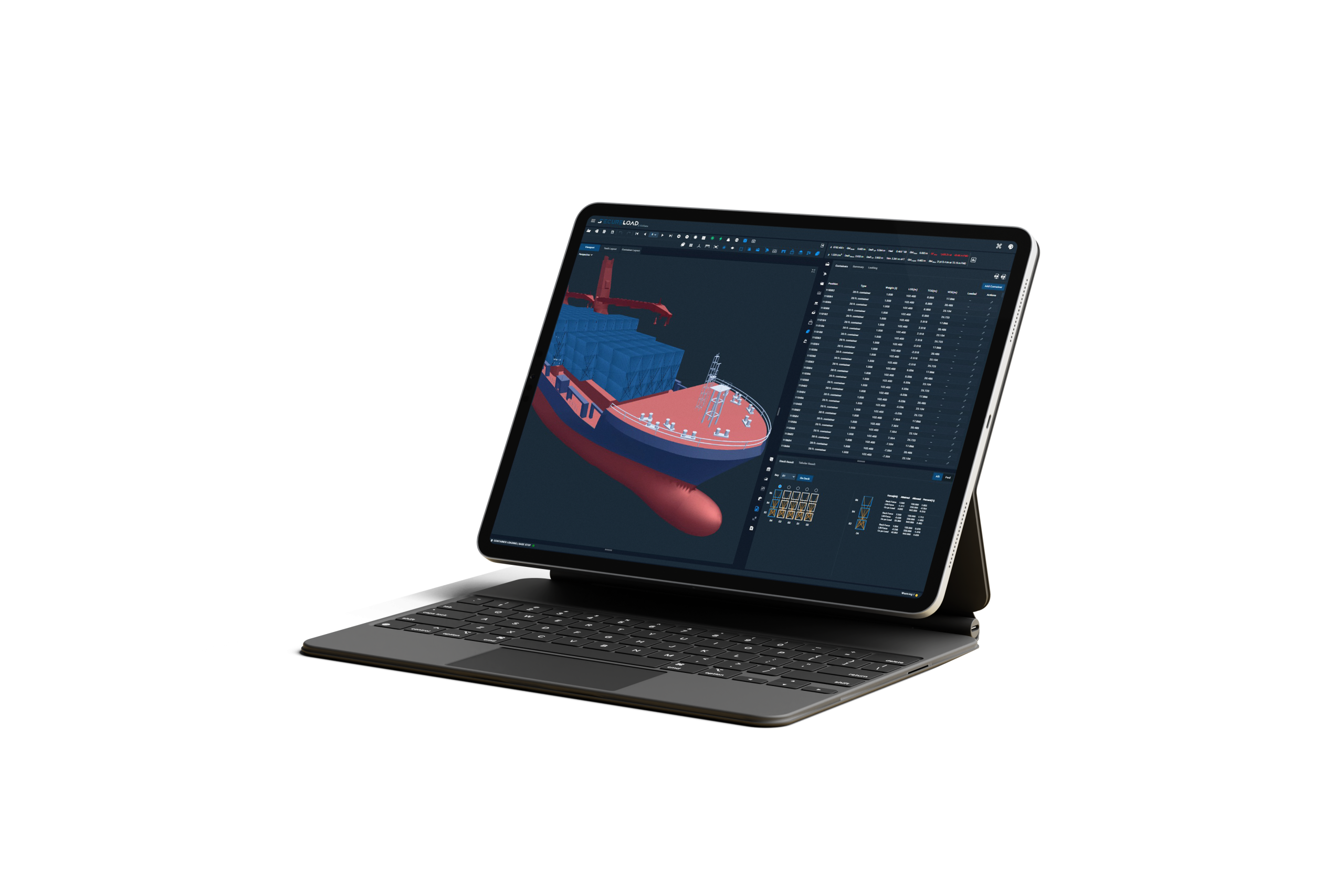
SecureLoad includes a comprehensive Container Module with tools for precise positioning, BAPLIE data exchange, and rigorous lashing assessments. To guarantee vessel integrity, the system provides real-time monitoring of Longitudinal Strength, checking Shear Force and Bending Moment against classification society limits. Future updates will introduce IMDG validation and local deck strength verification integrating structural twins to verify specific cargo footprints.

Unified Ship-Shore Collaboration

Establish a ‘Single Truth’ by ensuring that shore-based engineering teams use the exact same calculation engine as the onboard crew. Load-out plans developed in the office can be synced directly to the vessel for execution. This connectivity also enables remote oversight, allowing superintendents and port captains to monitor the vessel’s condition and progress, ensuring strict adherence to approved procedures across the fleet.

MODULES

Relevant Modules

Basic
basic.svg

Defines loading conditions and performs calculation of intact stability and longitudinal strength. Results are evaluated against applicable regulatory criteria and presented with full transparency through curves, limits, and numerical outputs, supported by comprehensive reports suitable for operational use  review.

Ballast Distribution
ballast_distribution.svg

Determines optimal ballast tank filling levels to achieve the desired loading condition. The module uses an iterative optimisation approach while approach while respecting operational constraints such as tank usage restrictions and filling limitations, ensuring solutions remain practical and executable onboard.

General Cargo
general_cargo.svg
The General Cargo module supports loading and distribution of unitized cargo across holds and deck areas. It enables configuration of hatch covers, tween decks, and internal bulkheads to accurately represent the vessel’s operational arrangement. The module includes predefined configuration to suit vessel-specific
Load-In / Load-Out
load-in-load-out.svg

The Load-In / Load-Out module supports continuous loading and discharge operations. Calculations account for varying tide conditions, moving cargo, ballast transfer, and vessel pump capacity. The module also evaluates stall conditions, including tide-compensation scenarios when SPMTs are stalled on the ramp. 

Crane
crane.svg

The Crane module supports simulation of cargo loading using single or tandem crane operations. Crane positions can be defined manually or derived automatically based on cargo geometry and position. The module performs load calculations throughout crane operations, verifies vessel stability and longitudinal strength 

Container
containers.svg

The Container module provides a structured environment for container positioning and stowage planning. It visualizes all containers in 3D & 2D and supports efficient placement in their designated positions. The module also supports BAPLIE data exchange, enabling seamless integration with container planning workflows.

Online
online.svg

Enables real-time integration of tank level data into the loading computer. The module connects to onboard tank sensor systems using standard MODBUS communication, allowing live updating of the vessel’s loading condition during operations.

DNV Container Lashing
ballast_control.svg

This module integrates DNV’s StowLash solver directly into the SecureLoad workflow. .It combines class-approved lashing calculations with a modern user interface, allowing container securing to be assessed alongside loading, stability, and operational planning without the need for external tools.

Hoppe Ballast Control
ballast_control.svg

Interfaces directly with ballast automation systems to execute ballast operations. Powered by Hoppe Marine GmbH, this module enables controlled and automated ballast water transfer based on the computed loading plan, linking calculation directly with execution.

Want to be part of our vision and journey?

Connect with us to explore how SecureLoad can modernize your cargo operations.

Get in touch - Submit a form

Contact Us