SecureLoad

SOLUTIONS

Bulk Carriers

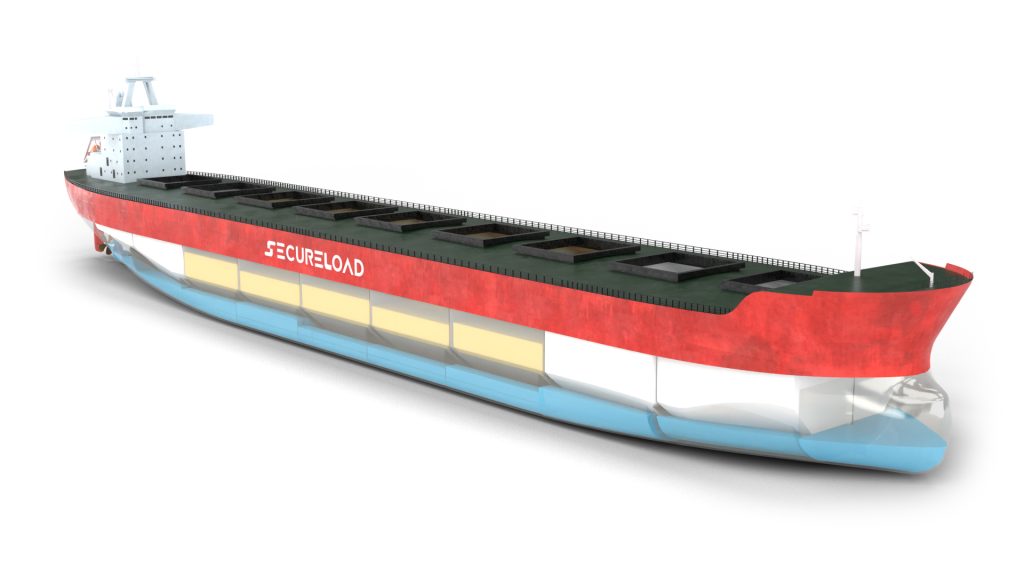
Bulk carriers are the backbone of global trade, transporting vast quantities of raw materials like iron ore, coal, grain, and cement. Increasingly, these vessels are also being utilized to transport project cargoes to maximize fleet utilization. Efficient and safe operation of these vessels requires rigorous management of stability, longitudinal strength, and ballast water, often under tight port turnaround times.

SecureLoad Systems provides a comprehensive, web-based solution tailored to the unique challenges of operating bulk carriers.


UNDERSTANDING THE COMPLEXITY

Operational Challenges

Operating bulk carriers involves navigating strict regulatory requirements and managing the structural stresses imposed by high-speed loading operations.

Structural Integrity & Loading Sequences

The loading and discharging of bulk cargo induce significant stresses on the vessel’s hull.

Global & Local Stress
Improper loading sequences can lead to excessive shear forces and bending moments, potentially causing catastrophic structural failure. Modern terminals load at very high rates, so the vessel’s deballasting must keep pace to maintain trim and avoid overstressing the hull. Additionally, heavy cargoes like iron ore can exceed the local strength limits of the tank top if not distributed correctly.

Ballast Water Management

Effective ballast management is critical for stability, trim, and environmental compliance.
Synchronization & Compliance
Ballasting and deballasting must be carefully synchronized with cargo operations to keep the vessel within safe limits for draft, trim, and air draft. Strict adherence to the Ballast Water Management (BWM) Convention is required, including proper exchange sequences and treatment recording.
Hydraulic Integrity
Rapid filling or emptying of tanks can lead to over-pressurization or vacuum damage if air pipes cannot cope with the flow rates.

Operational Constraints & Cargo Safety

Navigating regulatory requirements and managing inherent cargo risks.
Regulatory Limits
Operational constraints such as maintaining air draft for loading equipment and complying with SOLAS regulations for bridge visibility (blind sectors) are crucial.
Cargo-Specific Risks
Group A cargoes (e.g., nickel ore, fines) pose a risk of liquefaction, which can lead to a sudden loss of stability, while grain cargoes can shift, requiring specific stability criteria and heeling moment calculations.

Project Cargo on Bulk Carriers

Unique challenges introduced by transporting outsized, non-standard units.
Stowage & Geometry
Unlike box-shaped MPP holds, bulk carrier holds feature hopper tanks and topside tanks, creating irregular geometries that make stowage planning for large, non-standard units difficult and prone to clashes.
Point Loads & Sea Fastening
Tank tops designed for distributed bulk loads face high-intensity point loads from project cargo cradles or supports that can exceed local strength limits. Additionally, bulk carriers lack standard lashing eyes, so sea fastening often requires welding temporary D-rings or stoppers, which demands careful planning to avoid structural damage to the tank top or hopper sides.

Chartering & Feasibility Assessment

Assessing cargo compatibility is a critical first step in the chartering process. Integrating container management alongside general cargo requires standard positioning, lashing, and dangerous goods verification.
Manual Bottlenecks
When charterers receive a cargo list, assessing whether the cargoes can be loaded onboard subject to ship capacity, stability, and structural compliance is a critical step. This manual evaluation is frequently a tedious, iterative process involving complex calculations to determine feasibility before fixing the vessel.
CAPABILITIES

Bulk Carrier Features

Rapid Feasibility with Bulk Cargo Loader

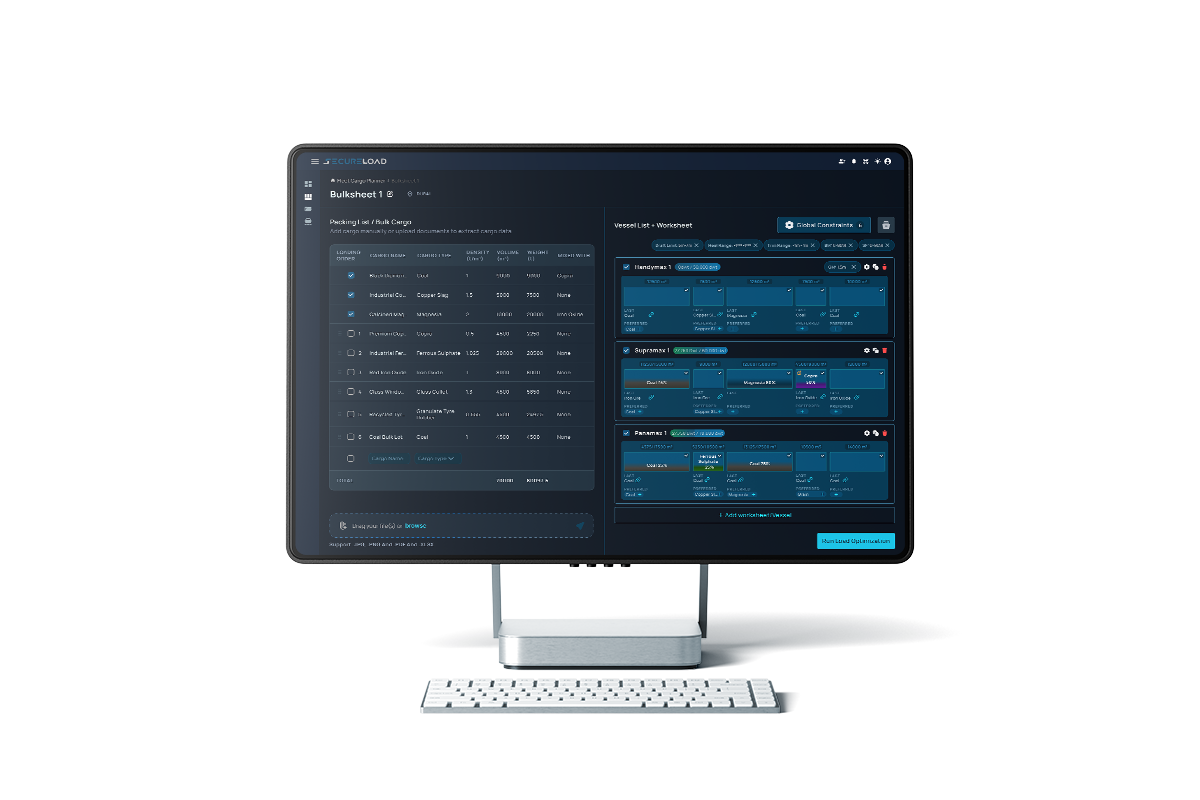
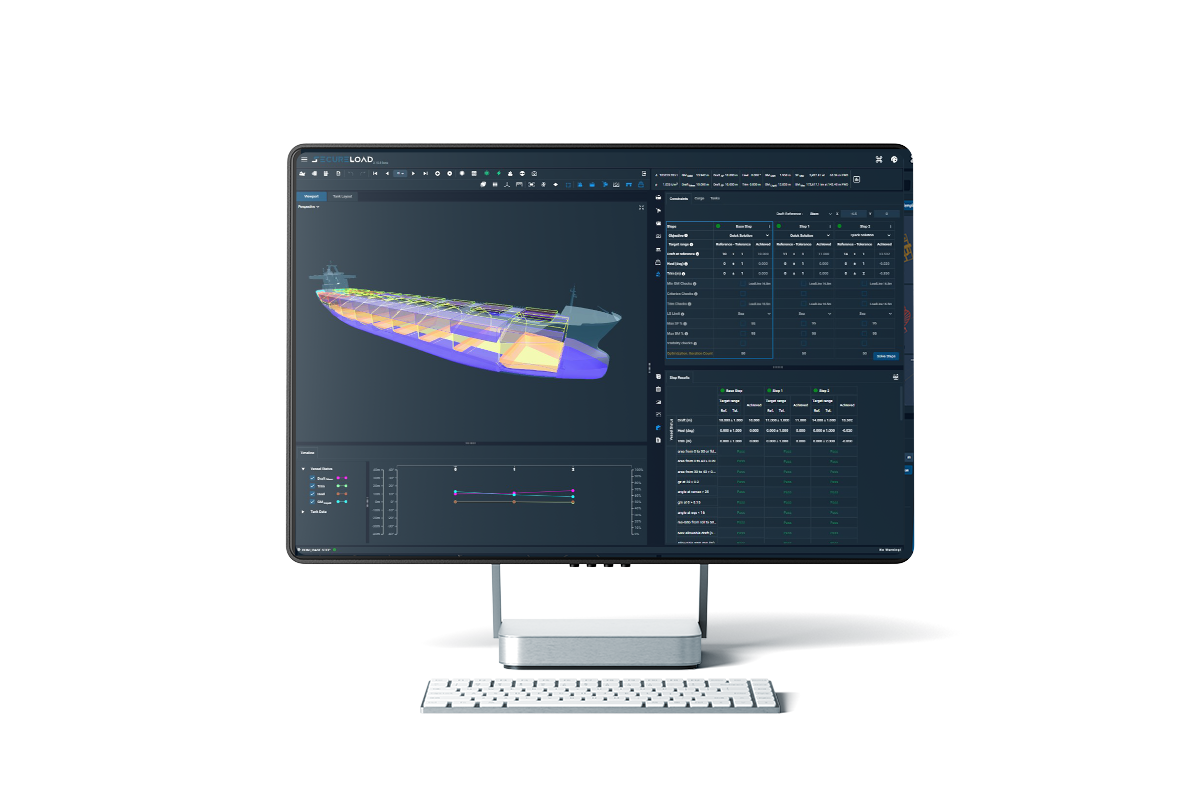
SecureLoad’s Bulk Cargo Loader module assists the chartering process by allowing users to quickly import a cargo list and assess its feasibility. It enables rapid verification of whether the proposed cargo complies with the vessel’s capacity, stability, and structural limits. Furthermore, it automatically solves ballast distribution to ensure the loading plan achieves the required floating status (draft, trim, heel) for departure and arrival.

Grain Stability Calculations

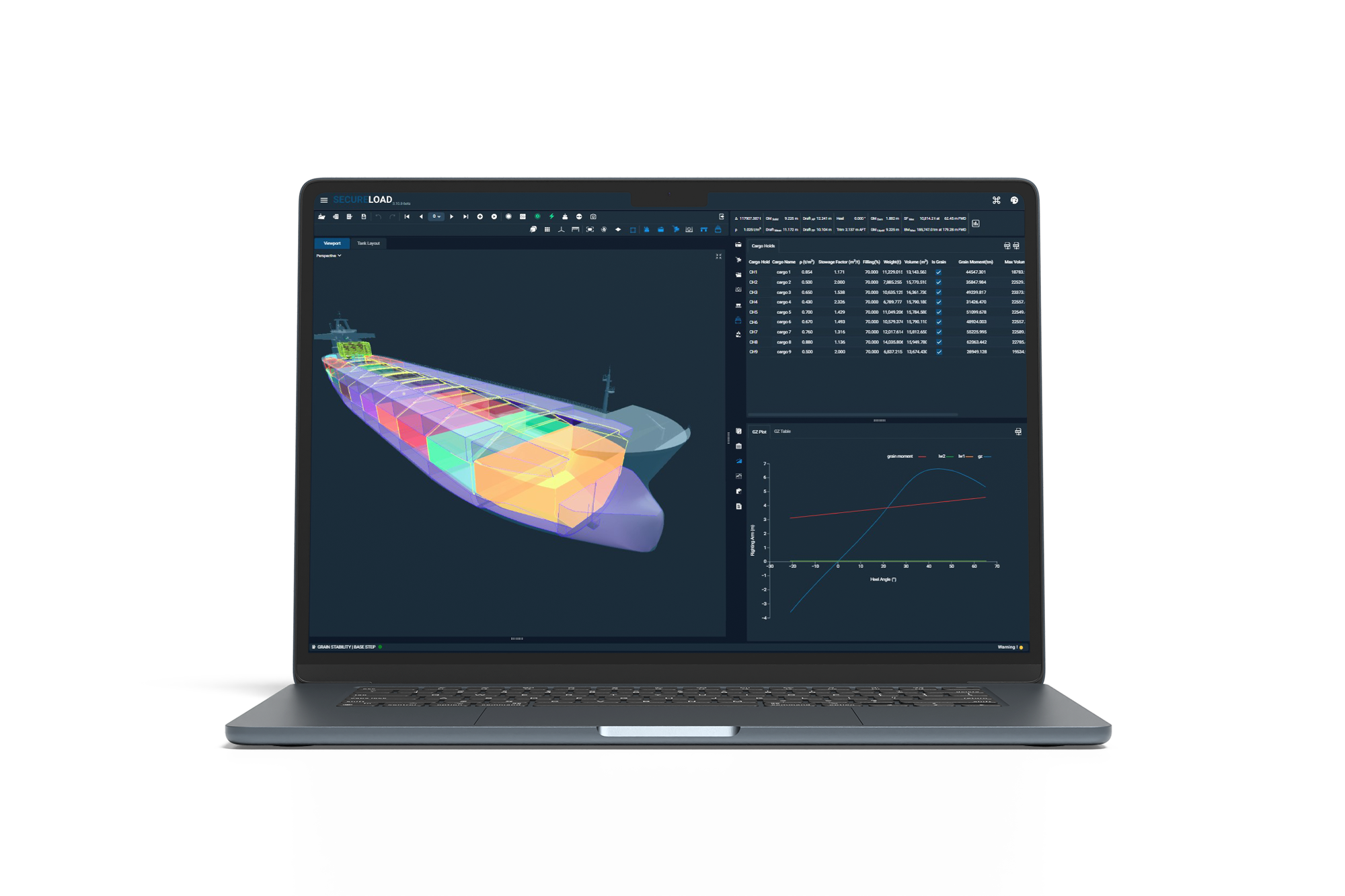
The system features specialized calculations for grain cargoes, including heeling moments and allowable heeling angles, ensuring compliance with the International Grain Code. It provides automatic verification of air draft clearance and bridge visibility lines at all loading stages and offers access to a comprehensive database of bulk cargo properties (stowage factors, angles of repose) for accurate planning.

Project Cargo Capabilities

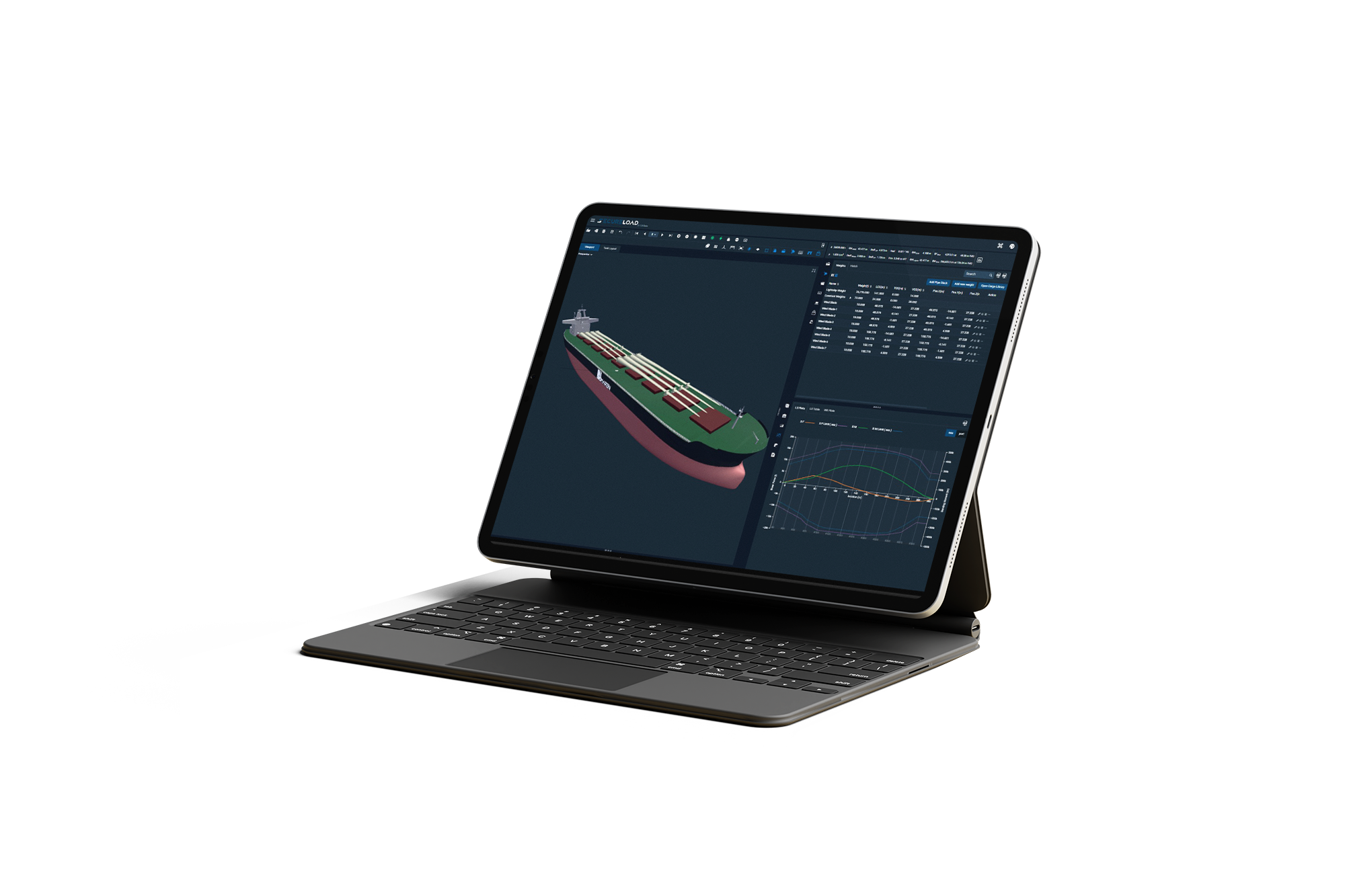
SecureLoad empowers bulk carrier operators to safely handle project cargo opportunities. Users can visualize project cargo within the exact 3D geometry of the bulk carrier hold (including hoppers and corrugated bulkheads) to optimize stowage and prevent clashes. The system verifies tank top strength against specific cargo footprints and weight distributions, ensuring point loads remain within safe limits. Additionally, users can calculate required lashing forces based on vessel-specific accelerations and design sea fastening plans (e.g., welding patterns) directly in the 3D model.

Unified Ship-Shore Collaboration

SecureLoad facilitates a single source of truth where the shore-based engineering team uses the exact same calculation engine as the onboard crew. A load-out plan developed in the office can be synced to the vessel for execution. Superintendents and port captains can also conduct remote oversight, monitoring the vessel’s condition and the progress of the load-out remotely (connectivity permitting), ensuring adherence to the approved procedure.

Advanced Ballast Distribution Module

System features a powerful Ballast Optimization engine. Users can define precise targets for Draft, Trim, and Heel along with acceptable tolerances. The solver iterates to find an optimal ballast configuration that achieves these floating targets while simultaneously verifying a comprehensive set of constraints. These include Stability & Safety checks against Minimum GM, intact stability criteria, and visibility regulations; Structural Integrity verification to ensure Shear Force (SF) and Bending Moment (BM) remain within user-defined percentages of permissible limits for both Sea and Harbour conditions; and Operational Constraints such as specific trim checks and speed settings.
MODULES

Relevant Modules

Basic
basic.svg

Defines loading conditions and performs calculation of intact stability and longitudinal strength. Results are evaluated against applicable regulatory criteria and presented with full transparency through curves, limits, and numerical outputs, supported by comprehensive reports suitable for operational use and compliance review.

Ballast Distribution
ballast_distribution.svg

Determines optimal ballast tank filling levels to achieve the desired loading condition. The module uses an iterative optimisation approach while respecting operational constraints such as tank usage restrictions and filling limitations, ensuring solutions remain practical and executable onboard.

Grain / Bulk Cargo
bulk_cargo.svg
The Grain and Bulk Cargo module supports loading of dry bulk and grain cargoes within configurable cargo holds. It evaluates loading conditions against applicable grain and bulk stability requirements, ensuring compliance with relevant grain codes and regulatory limits while accounting for cargo distribution across holds.
Bulk Cargo Loader
trim_optimization.svg

The Bulk Cargo Loader is an optimisation module designed to calculate efficient cargo distribution across all holds for both wet and dry bulk commodities. It iteratively evaluates cargo distribution scenarios while respecting operational constraints, reducing manual trial-and-error during bulk load planning.

Online
online.svg

Enables real-time integration of tank level data into the loading computer. The module connects to onboard tank sensor systems using standard MODBUS communication, allowing live updating of the vessel’s loading condition during operations.

Want to be part of our vision and journey?

Connect with us to explore how SecureLoad can modernize your cargo operations.

Get in touch - Submit a form

Contact Us